How DUOC UC is rethinking vocational education – a model for transformative learning


“We go where education is needed.” That could very well be the motto of DUOC UC, one of Chile’s most innovative institutions in technical and professional education. With over 105,000 students across 20 campuses, DUOC UC is not just preparing graduates for jobs. It’s preparing them for life, with a deeply integrated, future-facing educational model that deserves attention from schools and teachers worldwide.
A model rooted in purpose, not just curriculum
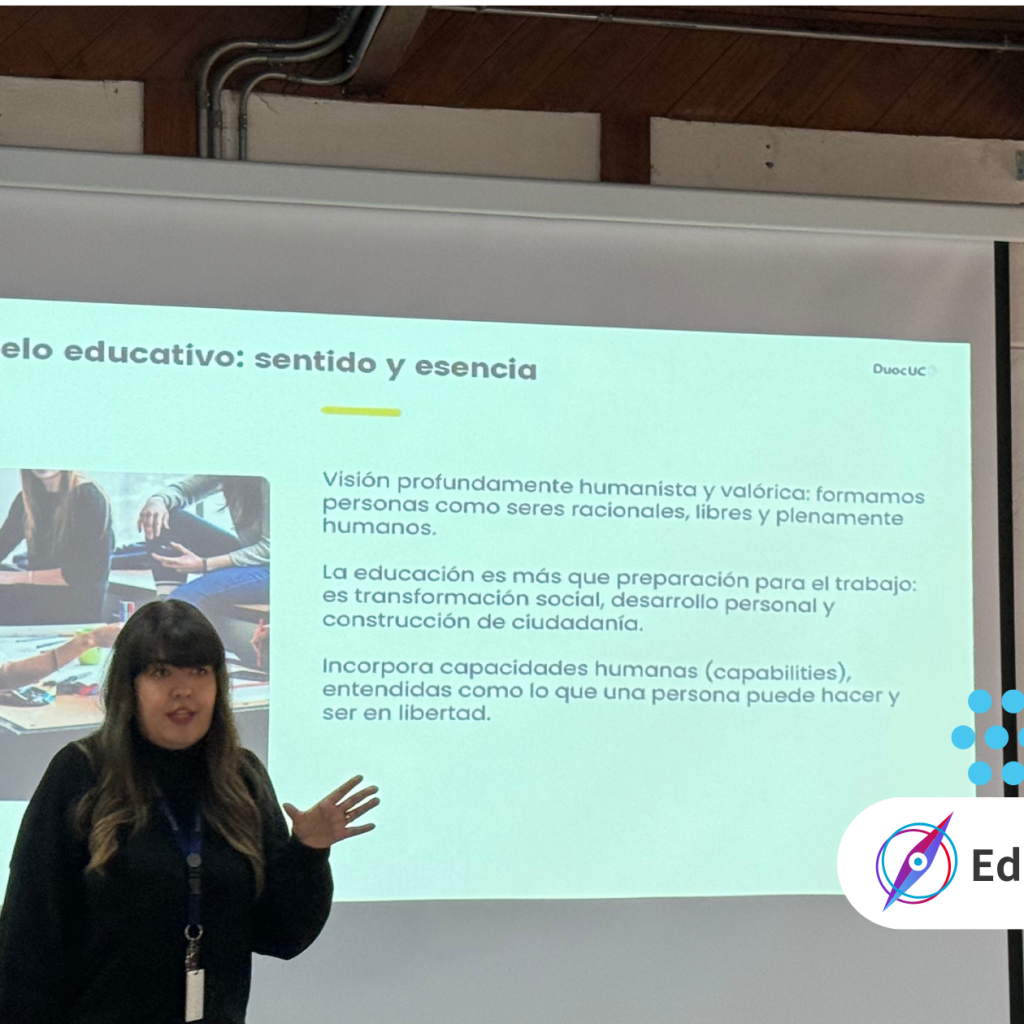
At the heart of DUOC UC’s approach is a values-based, student-centered philosophy. Every program is crafted using backwards design: starting with the end in mind—the graduate’s real-world performance. Learning outcomes are not theoretical; they are derived directly from the competencies students will need in industry and life. These outcomes guide every course, module, and activity.
Each program includes a Pedagogical Toolkit—a compact curriculum plan that lays out:
- Learning objectives and competencies
- Methods of assessment
- Active learning strategies
- Tools to measure and develop skills
It’s like a “teacher’s suitcase,” enabling consistency, clarity, and creativity across campuses.
Continuous industry alignment
DUOC updates every program to stay synchronized with industry demands. But they don’t stop at redesigning syllabi. Every faculty member is required to spend at least three years working in the industry they teach— a radical commitment that brings authenticity into the classroom. This ensures that what’s taught isn’t outdated theory, but current practice.
Through partnerships with businesses, DUOC co-develops solutions to real problems—such as waste management or sustainable energy—turning the classroom into an innovation lab. Students in tourism, for example, train in 5-star hotels in Mexico, while other programs use hologram lectures to bring top international experts into Chilean classrooms.
Technology that supports, not replaces
DUOC uses tech to enhance, not replace the human connection in learning. A national database tracks attendance and engagement, flagging students at risk. During the pandemic, partnerships with Banco Santander enabled hundreds of students to receive laptops, ensuring continuity of learning and social equity.
Their virtual learning environment incorporates tools for clinical simulations, ethical dilemmas, collaborative challenges, and contextual learning using drones, sensors, and immersive media. They are also exploring AI and metaverse technologies—not as gimmicks, but as authentic tools to create deeper, more relevant learning experiences.
Inclusion and community at the core
Guided by a Christian humanist philosophy, DUOC UC embeds inclusion and ethics at every level. This isn’t lip service. Their Educational Inclusion strategy guarantees retention, access, and success—especially for students from underrepresented backgrounds.
From day one, learners are treated as fully human beings with dignity, autonomy, and the power to shape their lives. The goal? To help them become professionals who don’t just work for a living—but live for something meaningful.
What schools and teachers can learn from DUOC UC
- Start with competencies, not content. DUOC’s backwards design model ensures every class is purposeful.
- Reconnect educators with the field. Faculty should regularly re-enter their industries to keep teaching grounded.
- Treat technology as a bridge, not a replacement. Use it to widen access, deepen learning, and connect with experts.
- Update your programs regularly. Industry evolves. So should education.
- Embed values and inclusion. Students thrive when they feel seen, respected, and part of a purpose-driven learning community.
For example, at Edu Compass, we’ve created “My Career Path”—a board game and full toolkit that brings career orientation and personal development into the classroom. It’s hands-on, motivational, and perfect for 7th–12th grade students. If you’re looking to connect curriculum with real life, this game might be your best starting point. Explore the game here.
Final thought – education that lives and breathes
DUOC UC’s model is bold, inspiring, and above all—replicable. It proves that vocational education can be rigorous, relevant, and deeply human.
If your school is ready to design an educational model that engages, empowers, and evolves with the world—contact us. Let’s build it together.
Още по темата

Financial literacy isn’t just a buzzword. It’s a set of life-shaping skills that empower students to make smarter choices, feel confident with money, and envision a future of independence and purpose. With the Prosper Youth video series, teachers now have an engaging, ready-to-use toolkit to bring these concepts to life. In this article, we explore […]
-
In Ancient Greece, Plato envisioned education not as a system of information transfer, but as a path to full human development. His Academy was a space where mind, body, and character grew together. Dialogue nurtured thinking. Shared action cultivated virtue. Physical movement strengthened the body. Learning was not fragmented—it was deeply human. Fast forward to […]

“They’re lazy, unfocused, and unable to concentrate.” Literacy, as well as the development of any skill, requires attention and discipline. We tend to think that this is something students simply need to choose to do. Yes, choice matters, but often they lack the skills that help them learn. And we don’t fully understand what those […]